

Virginia asked: After hurricane Ike, we had to bleach and wash off the mildew from any salvageable wood items including cabinets and furniture. Well, I did that to some old kitchen cabinets and it looks like something kind of black is still on there. Is there anything that can be done short of sanding it off?
Mildew is a type of mold that thrives in warm, moist environments. It can grow in nearly any location that has oxygen, moisture, and the slightest amount of organic material such as food or soil. Most mildew can be killed and removed with a few simple steps. If the mold continues to return, it usually means that all of the spores were not removed. Most mildew removers are chlorine-based and if they are not removed completely, the mildew will use the residue to grow on when humidity levels rise again. Periodic cleanings may be necessary until the mold is gone for good.
Removing Mildew from Painted Wood
You Will Need:
- Chlorine bleach
- Water
- Buckets
- Sponges
- Rubber gloves
Steps to Remove the Mildew and Mold:
- Begin by mixing one gallon of water with ¾ cup of bleach in the bucket.
- Fill a second bucket with plain, clean water.
- Moisten a sponge with the solution and gently scrub the mold and mildew until it is gone. Avoid letting water set on the wood for too long as it may cause damage. If necessary, repeat several times, drying each time so that the wood does not become saturated and warped.
- When the stains are removed, rinse with clean water from the second bucket.
- Ensure that all bleach residue is removed or it can lead to future growth.
- Allow the wood to dry completely.
Removing Mildew from Unpainted Wood
You Will Need:
- Chlorine bleach
- Water
- Buckets
- Sponges
- Rubber gloves
Steps to Remove the Mildew and Mold:
- Begin by mixing three parts water with one part bleach in the bucket.
- Fill a second bucket with plain, clean water.
- Moisten a sponge with the solution and gently scrub the mold and mildew until it is gone. Avoid letting water set on the wood for too long as it may cause damage.
- When all of the mold and mildew is gone, rinse completely with clean water.
- Be sure to remove all of the residue from the bleach or the mildew will likely return.
- Allow the wood to dry completely.
Removing Mildew from Wooden Furniture
You Will Need:
- Mild detergent
- Water
- Buckets
- Soft cloths
- Rubber gloves
- Vacuum
- Wax removing furniture cleaner
- Paste wax
Steps to Remove the Mildew and Mold:
- Begin by mixing the mild detergent with water in the bucket.
- Fill a second bucket with plain, clean water.
- Moisten a soft cloth with the mixture and wring it out completely. The cloth should be barely moist after wringing it out.
- Scrub the mildew areas on the furniture until the mildew is removed. It is best to work in small sections.
- Once the section is clean, rinse with clean water on a clean cloth.
- Finally, dry the section with dry, clean cloth.
- Repeat the process for each section until the entire piece has been cleaned.
- If a white coating appears on the piece after it has been cleaned, it is most likely due to wax build-up.
- Apply furniture cleaner to remove the layers of wax.
- Lastly, apply a thin layer of paste wax. Follow the manufacturer’s instructions for application.
Additional Tips and Ideas
- Once the mold is removed, make the appropriate adjustments to keep humidity at a reasonable level to help prevent mold and mildew from growing again. Clean and dry conditions keep mold and mildew from forming and thriving.
- There are protective sprays available that resist water and soil, the two things that mildew needs to grow. Applying these sprays can help to inhibit the growth of future mold and mildew.
- There are commercial cleaners available to remove mold and mildew as well. Often times, these contain harsh chemicals and should be used with caution. Read the instructions and warnings in their entirety to ensure you fully understand how to use them properly and safely.

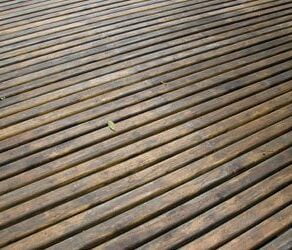






Scrub the area with a stiff brush.
That green stuff in the photo looks a lot more like algae than mold. Totally different life form, which only exists outside where it can have sunlight (like the old redwood fence in the photo).
Can I use Sugar Soap to clean my good quality (not teak) wooden garden furniture? What kind of a brush do I use; abrasive or non-abrasive? I know someone who has done this and it gives the wood a lovely clean whitish look. I do not want to ruin my furniture. In the past, I have not used oil on it, but just left it to weather.
How to remove white mold from wood? I looked all over the web for hours and still couldn’t find a chemical that would remove white mold/mildew from some wooden tables in my darkroom. This white mold was tough stuff. I tried all the commercial mold removers, X-14, Mold Armor, turpentine, paint thinner, Clorox, acetone, soap and water, vinegar, baking soda, lemon juice, Pine Sol, alcohol, paint, etc; everything else. Guess what?
After trial and error, I found that WD-40, whether sprayed on or brushed on aggressively, seemed to have killed the mold, but I did need to go back a few days later and apply another coat to the spots I missed. It really seems to have worked; after 10 days, the areas I treated do not have the mold. There was a little bit of the WD-40 oily smell for a few days, but it really seems to have worked. I think the WD-40 displaces moisture, penetrates the porous surface, dries it out and suffocates the mold (and kills it). Perhaps the petroleum distillates are toxic to mold. Tell your friends.
Did not mean to hit the thumbs down! Sorry.
To Bill,
Thanks for the tip. I live in Costa Rica where humidity is high. Tried everything, including lemon oil and pure pine oil. It always comes back. Lysol does not work and is expensive. I will try the WD-40. Hope it does the trick.
Dear Bill,
Thank you. I bought my daughter a secondhand bed (pine) – looks like I will treat it with hot soapy water. How do I tell the difference between mold and mildew? I’d rather hit it with soapy water than aggressive bleach. Hope what I have is mildew.
I know this is an old thread, but just in case. Mold and mildew sometimes grow together, but to differentiate them, mold is usually fuzzy in appearance and comes in a variety of colors, such as white, green, red, blue, yellow and black or brown and grey. Mold is also in cheese, like blue cheese, and you can consume it if it’s an edible and beneficial type, but ones on the furniture are usually not. Mildew on the other hand is flat in pattern and it can be powdery and downy. The color ranges from white to yellow for powdery mildew, which often damages cucumbers and other crops. In both cases, you need to use either alcohol (50/50 solution) or a bleach solution as it’s a living organism that needs to be killed in order to get rid of it or peel it off the surface.
I just found mildew in my cabinet drawer and my wood spoons. Can the spoons be cleaned and used or do I need to replace them? Also, how would I clean them?
We are redoing our attic and our home was build a century ago. We just put new metal roofing on, but we have a problem. There is mold and mildew on the rafters in the attic. What can we do other than replace all the wood in the attic?
Mandy,
The chlorine bleach solution can be used to remove the mold as well as the mildew. However, here is another article that might help: How to Clean Mold on Outdoor Wood Surfaces.
If using the commercial spray, you may want to spray all surfaces in the attic to kill the spores, not just the areas that are growing mold. You can also vacuum to remove as many mold spores (not the actual mold) as possible; it would be best to use a vacuum with a HEPA filter to prevent the spores from reentering the room.
If using the bleach solution, try to help the wood dry as quickly as possible, either by towel drying it, placing a dehumidifier in the room, opening a window or placing a fan in the room.
Once you have removed the mold and the wood has dried completely, test for wood rot with the methods in this article by the Chicago Tribune: Mold and mildew usually not a threat to lumber — unless you cover it before it’s dry.
Black mold on window sills. How to get rid of the black mold?
Use a bleach and soap solution or commercial mold and mildew remover, but bleach works very well. You need to use Kleenex and place the Kleenex paper onto the area, spray the bleach and soap solution, and leave it there for 30 minutes-1 hour until it’s killed. You can then scrub the area and rinse clean.
Hello Dave,
Did you ever get your answer about the black mold on windowsills, as I would like to know too.
Thanks.
Dave and Chamran,
Mold and mildew are not technically the same thing. However, they are both types of fungi and can be cleaned/removed the same way. All of the steps in the article can be used to remove both mold and mildew from wooden windowsills.
If there is any mold on the walls around the windowsills, use the article How to Remove Mold from Wallboard. If the walls around the windowsill are covered with wallpaper, you can use the article, How to Remove Mold from Behind Wallpaper.
At my doctors office, he has fish tanks, and on one, the top cover is wood. Well, he was asking me what can he use to get rid of the mold from the cover? I told him that I would look into it. He then removed it because it started to smell. Is there anything out there that we can use to get rid of the mold and the smell? Thank you.
Need help to remove a musky smell in a bedroom?
Glenda P,
There are some tips for dealing with odors in the article on How to Deodorize your Closets. You could also try removing the smell from the furniture if needed. To do that, see the post on How to Remove Musty Smells from Furniture.
I have wooden clothes bars that I hang wet clothes on in the winter months and I have noticed that the bars are starting to get black mildew on them. What would take that off? The wooden bars are made from the Amish and are heavy duty.
Thank you.
I have two pieces of enamel-painted oriental furniture; how do you clean mold off that without ruining it?
I am doing some work in a house where the client wants to use some tongue and groove wood [not sure what flavor] that came from a barn we took from his property. We used this wood a few years ago in a man cave and it looks wonderful. The leftovers have been bundled and stored outside and under a protective roof for approximately three years. Now that we are ready to use the wood again, there is a green mildew all over the wood in the center of the bundles…how can I safely clean it and be sure the mildew doesn’t return?
I need help cleaning and sanitizing the mold off of my wooden nightstand from hurricane Harvey. I’ve been told to use bleach and not to use bleach. I’m really confused on what to do. Please help!
Thank you,
Brandy
Brandy,
Flooding has its own special cleaning requirements and in that instance it is best to follow the guidelines of the CDC. They recommend the use of chlorine bleach for mold on hard surfaces. Good luck!
Source: CDC – Cleaning and Sanitizing with Bleach after an Emergency