
Gasoline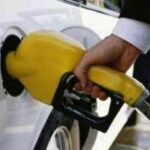 vapor deposits left in fuel injector nozzles after an engine is shut down form hard varnish. Over time, it can build up and clog the injectors. Gasoline additives and detergents already mixed into the gasoline you buy help reduce this problem, but they can’t eliminate it entirely. Injectors periodically need to be cleaned. Some experts recommend cleaning the injectors every 25,000 to 30,000 miles to keep them flowing at peak efficiency.
Preventives
But first, a word on prevention. In the U.S., most of those generic gas stations with names you’ve never heard of purchase their gasoline from the lest expensive source, sometimes including refiners who, to save a few pennies, may skimp on the engine-protecting detergents added to their product; name brand gasoline filling stations on the other hand are more reliable, many use their ‘special’ additive cocktail in their sales pitches. A special caution for those driving south of the border: just about the only gasoline you can purchase in Mexico, Pemex, is notorious for not only skimping on detergent but also selling dirty (and even watered-down) gasoline.
In addition to using top quality petrol, be certain to change your car’s fuel filter at least once a year.
But if you definitely feel the need to add additional injector-cleaning detergent to your gas tank, two such products that have been recommended to us are Chevron Techron and BG Industries 44K.
Other than using preventives, we do not recommend cleaning fuel injectors as a do-it-yourself project. But, if you insist on cleaning the injectors yourself…
Non-Invasive Cleaning
A faster and easier method than removal and cleaning.
Benefits:
- Running a commercially available cleaner through the injectors while the engine is running removes many of the deposits on the valves and inside the combustion chambers as well as in the fuel injectors.
- It takes only 15 minutes to determine, by running the engine, whether the treatment resulted in resolution of the symptoms of the fouling problem (poor idle, etc.).
Tools:
- Fuel injector cleaning kit; the cost will be around $100 at an auto supply outlet.
- Long screw driver.
Procedure:
This is the basic procedure – you will still need to follow the instructions that come with the kit.
- Either disable the fuel pump and plug the fuel return line (doing this on some cars may set a fault code which must be cleared after the job is completed), or
- Install a U-tube so the fuel will return directly to the tank.
- Disconnect the pressure regulator.
- Connect the cleaning kit to the fuel port on the fuel rail.
- Remove the fuel cap from the gas tank to ensure that excessive pressure does not build up in the system. Cleaning kits deliver a large burst of pressure to the fuel system.
- Turn the ignition to ensure that, with the fuel-pump shut off, the engine will not turn over.
- Open and continue to open the valve on the kit until the fuel pressure reading matches the one appropriate for your vehicle. (See your vehicle’s owners or service manual.)
- Start the engine to run the cleaning solvent through the injectors and let it run until the solvent is exhausted in about five minutes and the engine shuts down.
- Reset the fuel-pump switch and replace the gas cap.
- Reconnect the pressure regulator.
- Start the engine and check the fuel injectors for proper operation using an extra-long screwdriver as a “stethoscope.” Listen for clicking sounds in rapid sequence to indicate a properly operating injector.
Limitations and Considerations:
- Badly clogged injectors may not pass enough solvent during a normal cleaning cycle to be thoroughly cleaned.
- You may have to do some additional tests such as checking HC and CO levels in your emissions or an injector pressure drop test to confirm that the injectors responded well enough to your cleaning efforts.
- Strong solvents may attack rubber and plastic components in the fuel pump, regulator, and fuel lines.
- Because of the flammability of the gasoline and solvent you’re working with and the fact your engine needs to be running during this process there is some risk of injury attached to using this method.
Removal and Cleaning
This is not really an option open to the do-it-yourselfer because it requires special equipment that can cost anywhere from $4,000 to $8,300. Because of that and the labor involved, a shop may charge you $40+ per injector for removal and cleaning. (Makes you long for the good old days of carburetion, doesn’t it?)
But it’s a lot cheaper than spending at least twice that to replace ruined injectors with new ones, which is what happens when an injector becomes hopelessly clogged. And injectors can be tested, observed, and compared off the car. An injector that’s not passing as much liquid as the others can be re-cleaned. If that doesn’t work and the injector must be replaced, the injector that needs to be replaced is easily pinpointed.
Cleaning Other Components
When cleaning injectors, fuel varnish should also be removed from the throttle body and intake tract with an aerosol cleaning solvent. Intake valves and combustion chambers should also be cleaned using a “top cleaner” type of product, especially on engines that burn oil. Replace the spark plugs after performing any kind of engine cleaning; also change the oil and filter.








Adding Dextron/Mercon ATF one quart to 20 gallons of gas before a long road trip will safely clean dirty throttle body injectors for a price below five dollars.
Bryon, are you saying add transmission fluid to your gas? I have never heard that before.
Never use transmission fluid in a gas tank. There is an old product on the market since I was a teenager, it is called Marvel Mystery Oil. When you get a quart low on oil, add a can less than 8oz. to the crankcase. The remaining 8oz. should be added to the gas tank. Take a long trip and you will certainly see increased power. Have a great trip!!
I definitely agree with Bryon – the transmission fluid works OK. Mysteri oil is good too.
Ya, it works good. I used it and WOW; my 1987 k-car runs like it just came off the show room floor. Thanks for the tip guys; keep them coming.
Thanks, Kenneth
I’ve heard a LOT of people recommend “sea foam” online… supposedly it cleans everything.
You add 1/3 of the can to your tank, 1/3 to your oil (crankcase?) or the last 1/3 ….. I can’t remember where, lol. And it’s supposed to clean out your injectors, oil, etc.
But personally, I just go with the over-the-counter fuel injector stuff.
If you pay the 20 bucks at Walmart, they have an “IV drip” type system, in which they put some solution in the tank, and some in an IV drip type thing, and feed it directly into the engine or something to thoroughly clean the injectors.
Best left to an expert lol.
BG products are only available at dealerships and are overpriced. I have no clue where to get Chevron’s products. The process described above is far different from the process we used at the dealership where I worked. We poured a can of BG 44K in the tank, used a spray to clean the throttle plate, and used a vacuum port to suck BG’s Engine Treatment into the plenum at a steady rate for 5-10 minutes while the engine ran at 2000-3000 rpm.
MMO and ATF are both good at loosening up carbon deposits, but may foul your oxygen sensor.
The gas market is pretty open, and most any gas station, name brand or not, buys from whoever’s selling at the best price. Some of the better brands may add their own additives that may help reduce deposits, but I’ve been using 7-Eleven gas for decades now and haven’t had a problem yet.
The fact is fuel standards are higher than they used to be and fuel injectors are a lot more resilient than they used to be. If your injectors clog within the expected life of your vehicle, then it’s likely you got some seriously old gas that turned to varnish or somebody put something in your tank.
Or your mechanic doesn’t know what’s wrong and is just selling you something.
Wal-Mart uses Gumout injector cleaner for their injector service. The canister with the cleaner that they hook up to your car connects to an intake vacuum line like the brake booster hose. The cleaner just gets sucked into your fuel system where the air and fuel are mixed. Some people think it helps, but I think it’s a waste of money. I’ve seen Wal-Mart techs sell this service to people that don’t even have fuel injectors on their car. I think a good fuel additive like Seafoam or Marvel Mystery Oil is more effective. Just my opinion; I’m a Wal-Mart tech.
Does it also work for diesel engines? I mean, can we add ATF to diesel engines safely?
TIA
The best off the car fuel injector cleaner I have found is the ASNU system. http://www.asnu.com. The best on the car fuel system maintenance chemical and equipment isn’t available to “man on the street.” MotorVac is about $4000 for their on the car system, quite pricey. I have been using the ETECH chemicals and tools for 10+ years and I know they work. Most of the “professional only” chemicals work to some degree, ETECH is just my personal choice. Tell your mechanic to ask his NAPA man about it.
I had a 2003 dodge Cummins. Fuel pump kept messing up. I told an old timer about it he said to add automatic transmission fluid – about a half to a whole quart per fill up. He said new diesel and the biodiesels dry out seals. He was right, I’ve put 100,000 miles on since then with no problems.
ATF is a good additive for diesel engines. It has detergent and would clean out the fuel system. It also provides some lubrication to the today ULSD (Ultra Low Sulfur Diesel), which is detrimental to diesel engines built prior to 2006.
I use ATF and TW-C3 2-stroke engine oil alternatively in my fuel tank for my F250. It smooths out my engine nicely.
Walmart guy, the stuff that goes into the vacuum line is top engine clean / induction system clean, not injector cleaner. A fuel system can’t “suck” anything in. Top engine clean is good for carbonated or injected engines.
Oxygen sensors are sensitive to oil contamination. One of the main reasons why fuel injected two-stroke engines don’t have this sensor. Could this excess oil damage it? Just a thought.
I have a 1995 Aurora and I was getting a hesitation that felt like it was misfiring. I had replaced all the gaskets, plugs and plug wires, nothing helped.
I got pushy one day, filled up my gas tank, put half a gallon of ethanol racing fuel into the fuel tank, and two standard bottles of STP Fuel Injector Cleaner.
Ran my car at about 4000 RPM’s and voila.
Although, I do NOT recommend doing this, but if you have tried everything, it’s a decent alternative.
I have been told, by an oil company executive, that OTC inj. cleaners amount to “mouse milk,” because even if they have an effective cleaner, there isn’t enough to do any good. RE: fuel quality, is there some posting that shows which fuels have good cleaning properties?
Really, “mouse milk”… Well, I used an OTC fuel injector cleaner on my 2001 Ford Expedition because I was running it on low fuel a lot and it helped. Matter of fact, it was Gumout for two bucks at a retail store. It quit trying to stall on me. As for me, I would never trust an oil exec.; they are crooks.
Hi guys. I own a diesel 80-series land cruiser. I started using ATF (clean ATF straight out the bottle] in my fuel. It’s 500 ml to a full tank (93 ltr) The result is amazing – a lot less diesel clatter, no smoke, a hell of a lot more power, and over all, it is running very smooth. There is no change in the running temp; It runs nice and cool as always. As for an engine flush, I buy Nulon diesel engine flush (Australian made) and use two bottles every oil and filter change (5000 kilometers). Idle for 30 minutes and drain well until pan stops dripping. Put the plug back in and your new filter, and you’re back on the road with a perfectly clean engine. Done it for years. My cruiser now has done 300,000 km and runs like a brand new cruiser. Cheers. Ferry, Australia.
Hi guys. I have read all of your comments, but I think this is not the best way to clean an injector. If you add ATF to the fuel tank you can make the liners stick, as well as the injectors and sensors. It is preferable to add a small quantity of naptha to dissolve some varnish caused by the oxidation process (the gasket can be oxidized by free radicals into the fuel). If you add some TCW 2T-stroke engine oil it can work well because it has almost 40% naptha solvent and some dispersant additives that helps the cleaning process.
You can try to use a mix of 97-percent of naptha and 3-percent of xylene, it will work pretty well also.
See you!
Years ago, automatic transmission fluid (ATF) was made with whale oil and would burn clean when mixed with fuel. Today’s ATF is made to withstand higher transmission temperatures and not burn. Adding the new ATF to your fuel will create harmful deposits. For diesel, 2-stroke oil works well.
I bought a 2003 Altima that has 166K miles. It ran fine for the first hour, then after an oil change, the check engine light came on and it began the typical missing and hesitating associated with the O2 sensor. The salesman said to put an injector cleaner in when I filled it up, and drive it around. It improved a bit, but not good enough. Should I change the O2 sensor, do more injector cleaner, or another product? The motor runs great at idle. The car was not cared for during the last 50k miles.
I’ve been reading plenty about adding transmission fluid to my gas tank to help clean the fuel injectors. Can someone rate this method as being a good method on a scale of 1-5, 1 being, “no way!” to 5 being “a pretty good idea!”?
I have a set of Bosch fuel injector nozzles that I would like to clean before I put them back in the car. What can I soak them in to help internal cleaning?
Umm… I know it’s been a while since anyone has posted, and this may be a little off topic, but what would an oil company executive (or any executive for that matter) know about working on cars? In fact, most of the executives I’ve met don’t really know about anything and are actually quite proud of their ignorance. To be honest, I don’t know how they even get their shoes tied in the morning.
What works for me is to fill the tank with premium, run it down to about two gallons left in the tank, and then just load it up with a cocktail of three or four different kinds of injector/fuel system cleaners, with a bottle of octane booster (sometimes more if the mood strikes me). Drive out another gallon and then fuel up normally. It’s like running jet fuel. Just don’t load up the motor too heavy. Just do some stop-and-go; head to the post office or something. The higher ratio of detergent to fuel makes it work so much more efficiently. And you don’t have to worry about stalling out: fuel system cleaners obviously do burn.
In the military, a secret we use for our vehicles in Afghanistan is Marvel Mystery Oil. It lubricates and cleans very well, not to mention improves gas mileage by about 5%. Not too bad for the economy where gas will soon be $5.00 per gallon! When using ATF, it does do a decent job but not as good, and it actually can leave harmful deposits due to the newer ATF compared to the older ones being hard to dissolve in a timely manner, or it doesn’t dissolve at all because of new additives mixed to help with the newer transmissions of today. Where it helps to break down heat a bit more compared to old school ATF, it had less additives and completely burned clean due this fact.
I really need to know how to disassemble the fuel injection nozzle of an LR4, because I had tried to bring it out but could not.
Hi, I have a Mercedes-Benz E240 w110 1999 automatic. I have one slightly faulty fuel injector in the car (only know about the problem after the car have been plugged into the computer). The mechanic suggested I should put in injector cleaner in my fuel tank to fix the problem. Is it good or will it cause more harm?
I have a 1996 Chevy Caprice 4.3 V8. I have replaced the fuel pump, fuel filter, spark plugs and wires, O2 sensors, cap and rotor, had the fuel system cleaned with the IV drip, and still there is an intermittent stumble that is audible when I first press on the pedal. It goes away and smooths out, but what in heck can I do to make it stop altogether?
It could be a dirty fuel filter causing that or the start of a failing fuel pump or pressure regulator. Start by changing the filter. If that doesn’t work, check the fuel pressure. Look on youtube to find out how. Good luck.
We have a ’95 Buick LeSarbre that will hesitate right before I take off. As we are driving, it does it again, so we have to increase the acceleration to get it going. We have been pouring in fuel injection cleaner once in a while, but my car does this all the time. It has a new fuel pump, new wires, and we also replaced the spark plugs and fuel filter. What kind of fuel interjection cleaner will help?
I have serviced over 250,000 injectors in the last 10 years and strongly advise against adding more than the recommended amount of injector cleaner in attempt to clean injectors. Internal seals or coil damage can result and not be apparent at the time, but can shorten injector life.
Most of the time, moisture is the biggest culprit in older injected cars. Add a bottle of water remover first, run it out and a tank, fill up again and the next time, use some Techron injector cleaner; use as directed.
If that doesn’t help, send them out to a professional that can actually test and measure what it is doing.
I would avoid in-tank additives (or for that matter, putting anything into an engine that is not recommended by the manufacturer). They free up gunk that clogs your fuel filter and do little to help injectors (not enough solvent, and enough solvent can damage rubber hoses, etc.). It’s not hard to remove your injectors (empty the fuel lines by starting the car with the fuel pump fuse pulled). Take them to a pro-cleaner that your local shop will sub this work out to. They’ll also tell you if one is (electrically) failing. It’s about 80 bucks with tax for four cylinders. There are some great videos about DIY fuel injection cleaning (removal) on YouTube. I have no reason to expect this works as well as an $8K machine, but it almost certainly works better than adding stuff to the tank. I had MotorVac once and it was a big improvement, so there’s that, if you don’t want to remove the injectors or go to a traditional shop.
To set the record straight, Marvel Mystery Oil has been used from World War II until now in every type of engine; gas or diesel tanks, jeeps, jets, need I say more? And, yes, they still use it.
I like Shell V-Power; I throttle up sooner, downshift sooner, keep clean and I get almost 50 MPG hypermiling a mixed course in a Toyota Echo.
Hypermilers unite – you have nothing to loose but your long hydrocarbon chains!
Wow…really excited; my injectors have been giving me some stock lately. Not sure where I can find mystery oil, I live way down in the Caribbean, willing to try the ATF though.
Thnx guys! Happy driving.
.
Pennzoil Marine 2-Stroke Synthetic Oil. 1 oz per 5 gallons of gas. Excellent cleaner and lube for the whole system. Or: mix 50/50 Marvel Mystery Oil with Lucas Upper Cylinder Lube and Injector Cleaner. 1 oz per 5 gallons of gas. Another excellent cleaner and lube.
To begin, you should turn off the engine and open the hood in order to locate your fuel injectors. You may need a reference guide or engine repair manual in order to locate where the fuel injectors are located in your engine. Fuel storage tank doesn’t flow and the injector will not spray fuel in the pattern in which they are designed for.
Let me see, so far we seem to have the whole car covered. There must be something else we can do to fatten the wallets of the auto industry? I KNOW!!
Let’s take off the manifolds and the whole exhaust system and clean it real good, every 3000 miles. Maybe we can use vinegar or some real expensive cleaner. I’m sure it will improve engine performance and increase milage, not to mention it will make you feel better. It will also clean the environment with all that clean air coming out of your exhaust system. If we work it right, we can do it for a little under $500.00. And all the repair shops, mechanics and even some gas stations will all come out and celebrate.
Where did you come up with your equipment prices? Even at the lowest price you stated, $4000 is a rip off for some wrenches, ratchets, screwdrivers and a puller. It’s actually cheaper to remove it yourself; the only uncommon item you may need is an injector puller.
Using a simple additive in the tank is the easiest way for most folks.
But those with a more DIY attitude can also get themselves a cleaner kit for added effectiveness. That will pump the cleaner through the fuel system with pressure and clean better.